

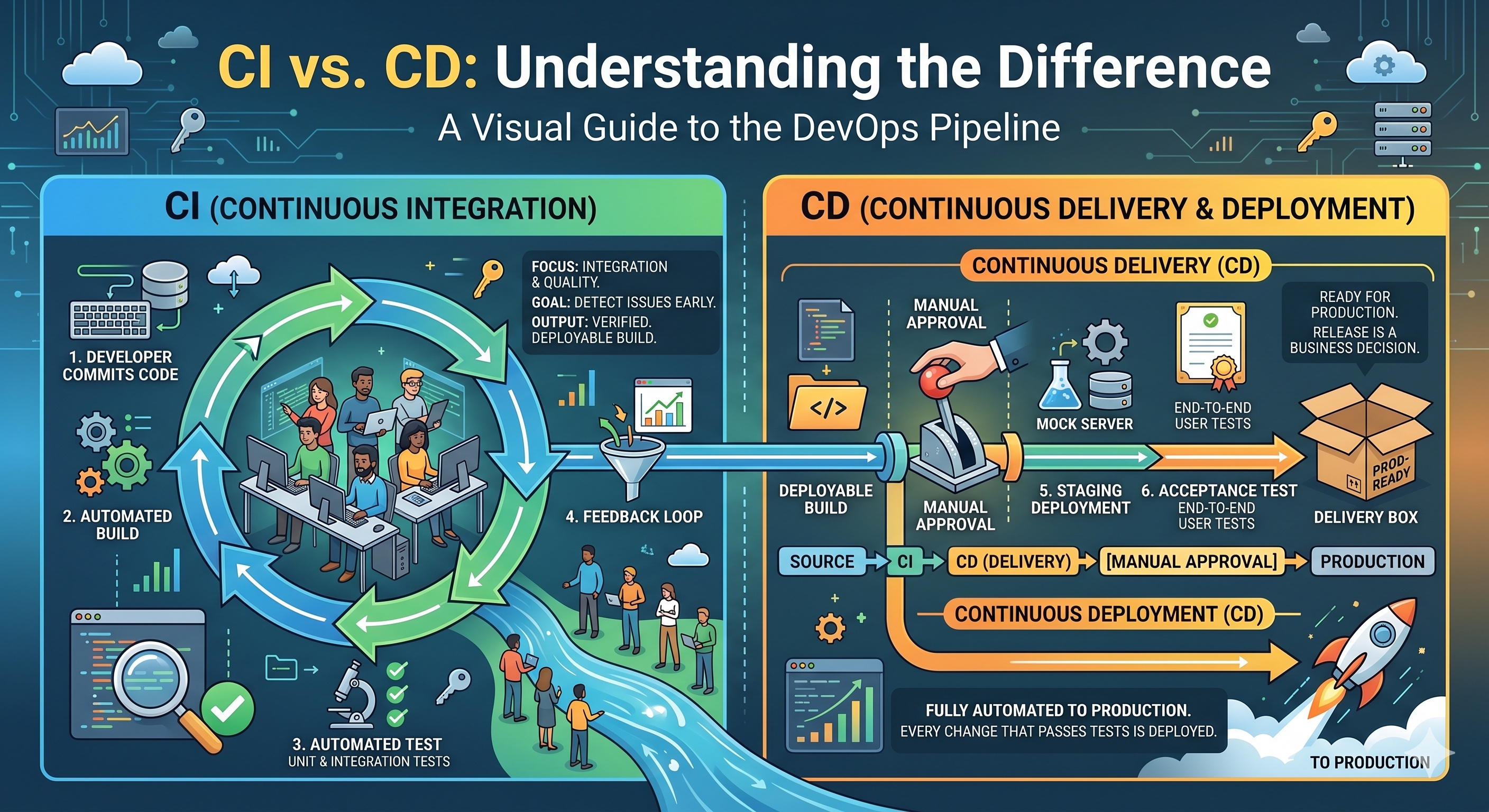
The terms Continuous Integration (CI) and Continuous Deployment (CD) are often used interchangeably, but they represent two distinct concepts in the software development lifecycle. While both practices are essential for modern software development, understanding their differences is crucial for implementing them effectively. In this article, we will delve into the world of CI and CD, exploring their definitions, benefits, and differences, to help you make informed decisions for your software development projects.
Introduction to Continuous Integration (CI)
Continuous Integration is a software development practice that involves regularly integrating code changes from individual developers into a central repository. This process is typically automated, using tools such as Jenkins, GitLab CI/CD, or CircleCI, to build and test the codebase after each commit. The primary goal of CI is to detect and fix integration issues early in the development cycle, reducing the risk of downstream problems and improving overall code quality.
Key Components of CI
The following components are essential for a successful CI pipeline:
- **Version Control System (VCS)**: A VCS, such as Git, is used to manage code changes and track revisions.
- Automated Build Process: A build tool, like Maven or Gradle, is used to compile and package the code.
- Automated Testing: Unit tests, integration tests, and other types of tests are run to verify the code's functionality and catch errors.
- Feedback Mechanism: The CI tool provides feedback to developers about the build and test results, enabling them to address issues promptly.
Introduction to Continuous Deployment (CD)
Continuous Deployment is a software development practice that takes CI to the next level by automating the deployment of code changes to production after they have passed through the CI pipeline. CD ensures that the code is deployed to production quickly and reliably, reducing the time and effort required to release new features or updates. The primary goal of CD is to minimize the risk of human error and ensure that the production environment is always up-to-date and stable.
Key Components of CD
The following components are essential for a successful CD pipeline:
- Automated Deployment: The CD tool, such as AWS CodeDeploy or Google Cloud Deployment Manager, automates the deployment of code changes to production.
- Environment Management: The CD tool manages multiple environments, such as staging, testing, and production, to ensure that the code is deployed to the correct environment.
- Rollback Mechanism: The CD tool provides a rollback mechanism to quickly revert to a previous version of the code in case of issues or errors.
- Monitoring and Logging: The CD tool provides monitoring and logging capabilities to track the performance and health of the application in production.
Comparison of CI and CD
While CI and CD are related concepts, they serve different purposes in the software development lifecycle. The following table summarizes the key differences between CI and CD:
Benefits of Implementing CI and CD
Implementing CI and CD can bring numerous benefits to software development projects, including:
- Faster Time-to-Market: CI and CD enable developers to release new features and updates quickly and reliably, reducing the time-to-market and improving competitiveness.
- Improved Code Quality: CI helps detect and fix integration issues early, improving overall code quality and reducing downstream problems.
- Reduced Risk: CD minimizes the risk of human error and ensures that the production environment is always up-to-date and stable.
- Increased Efficiency: CI and CD automate many manual tasks, freeing up developers to focus on writing code and improving the overall efficiency of the development process.
Challenges and Best Practices
While implementing CI and CD can be beneficial, it also presents several challenges, such as:
- Initial Setup and Configuration: Setting up a CI/CD pipeline can be complex and time-consuming, requiring significant resources and expertise.
- Test Automation: Writing automated tests can be challenging, especially for complex applications or legacy codebases.
- Infrastructure and Environment Management: Managing multiple environments and infrastructure components can be daunting, requiring careful planning and monitoring.
To overcome these challenges, follow these best practices:
- Start Small: Begin with a simple CI/CD pipeline and gradually add more complexity and automation.
- Automate Testing: Invest in automated testing tools and frameworks to improve test coverage and efficiency.
- Monitor and Analyze: Monitor and analyze the CI/CD pipeline to identify bottlenecks and areas for improvement.
Conclusion
In conclusion, CI and CD are two distinct concepts in the software development lifecycle, each serving a unique purpose. While CI focuses on detecting and fixing integration issues early, CD automates the deployment of code changes to production. By understanding the differences between CI and CD, developers can implement these practices effectively, improving code quality, reducing risk, and increasing efficiency. By following best practices and overcoming challenges, teams can unlock the full potential of CI and CD, enabling them to deliver high-quality software quickly and reliably.