

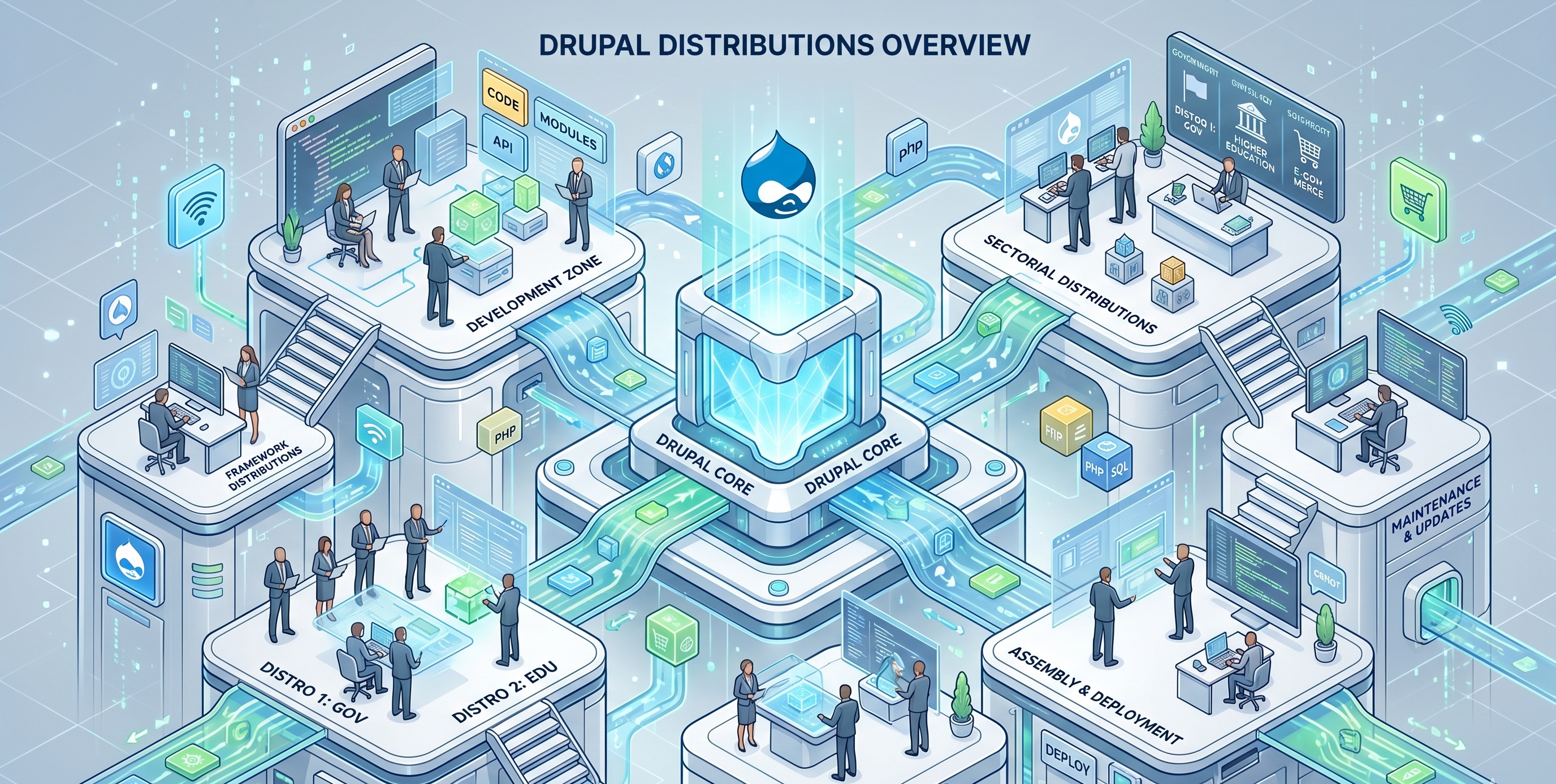
Drupal is a powerful and flexible content management system (CMS) that has been widely adopted by individuals, organizations, and governments around the world. One of the key features that sets Drupal apart from other CMS platforms is its concept of distributions. In this article, we will provide an overview of Drupal distributions, including what they are, how they work, and the benefits they offer to developers and users.
Introduction to Drupal Distributions
A Drupal distribution is a pre-configured version of the Drupal CMS that includes a set of modules, themes, and configurations designed to meet the specific needs of a particular use case or industry. Distributions are essentially pre-packaged solutions that can be used as a starting point for building a website or application, rather than starting from scratch with a plain Drupal installation. This approach can save time and effort, as well as reduce the complexity and cost of developing a custom solution.
Types of Drupal Distributions
There are several types of Drupal distributions available, each with its own unique characteristics and features. Some of the most popular distributions include:
- Acquia Drupal: A distribution designed for enterprise-level websites and applications, with a focus on security, scalability, and performance.
- Drupal Commons: A distribution designed for social networking and community-building applications, with features such as user profiles, groups, and discussion forums.
- OpenPublic: A distribution designed for government and public sector websites, with features such as accessibility, security, and compliance with government regulations.
- Panopoly: A distribution designed for building complex, data-driven applications, with features such as entity management, workflows, and data visualization.
How Drupal Distributions Work
Drupal distributions work by providing a pre-configured set of modules, themes, and configurations that are designed to work together to meet the specific needs of a particular use case or industry. When you install a distribution, you are essentially installing a complete solution that includes all of the necessary components to get started with building your website or application. This can include things like:
- Modules: Pre-installed modules that provide specific functionality, such as user management, content creation, or e-commerce integration.
- Themes: Pre-designed themes that provide a consistent look and feel for your website or application.
- Configurations: Pre-configured settings and options that are tailored to the specific needs of the distribution.
- Content types: Pre-defined content types that are designed to meet the specific needs of the distribution, such as articles, blogs, or products.
Benefits of Using Drupal Distributions
There are several benefits to using Drupal distributions, including:
- Faster development time: By starting with a pre-configured solution, you can save time and effort in developing your website or application.
- Reduced complexity: Distributions can simplify the development process by providing a pre-packaged solution that includes all of the necessary components.
- Improved security: Many distributions include security features and configurations that are designed to protect your website or application from common threats.
- Community support: Many distributions have active communities of developers and users who contribute to the project, provide support, and share knowledge and expertise.
Popular Use Cases for Drupal Distributions
Drupal distributions can be used for a wide range of applications and use cases, including:
- Websites: Distributions can be used to build complex, data-driven websites with features such as user management, content creation, and e-commerce integration.
- Applications: Distributions can be used to build custom applications, such as social networking platforms, online communities, or data visualization tools.
- Intranets: Distributions can be used to build internal websites and applications for organizations, with features such as user management, document management, and collaboration tools.
- Portals: Distributions can be used to build portals for governments, educational institutions, or other organizations, with features such as user management, content creation, and e-commerce integration.
Conclusion
In conclusion, Drupal distributions provide a powerful and flexible way to build complex websites and applications using the Drupal CMS. By providing pre-configured solutions that include modules, themes, and configurations, distributions can save time and effort, reduce complexity, and improve security. With a wide range of distributions available, developers and users can choose the one that best meets their needs and use case, and take advantage of the many benefits that distributions have to offer. Whether you are building a website, application, or portal, Drupal distributions are definitely worth considering as a starting point for your next project.